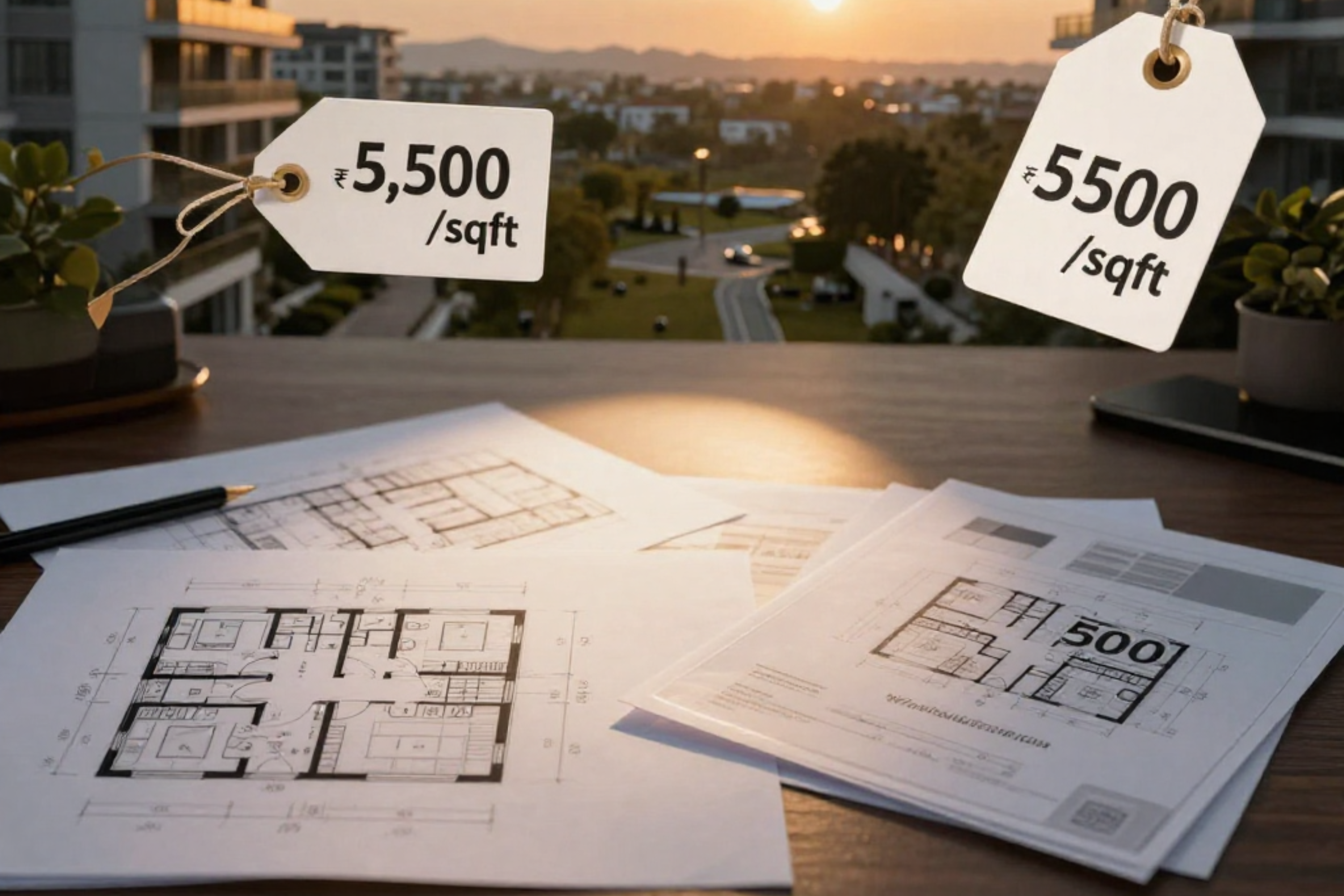
Price is never the real problem. It only feels like it.
When every builder in the same micro market lands at ₹5,500/sqft, it
isn’t a coincidence. Land cost is fixed. Construction cost is fixed.
Permissions, approvals, material inflation, labour, financing,
architecture, structure, MEP, and statutory charges all fall in the
same band.
The established builder didn’t win a secret discount. They just bought
in the same market. The economics force everyone into the same
baseline. At best, there’s ₹200 to ₹300 per sqft of wiggle room before
you start shaving off margins that fund the project itself.
This is why lowering prices is not a strategy. It is a short-term
painkiller that leads to a long-term headache. Matching price without
a unique angle is even worse because it leaves the buyer with no
reason to pick you over the neighbour.
Below is what actually moves the needle.
When two builders sit at the same price, half the market stops
comparing prices altogether. That part of the audience starts looking
for something else. Their decision becomes emotional, functional, and
trust-based.
Most builders miss this completely.
Six out of ten buyers feel like the builder wasn’t listening. They
felt pushed. They felt pitched to. They felt unheard.
But here’s the twist. The buyers who walked away feeling understood
ended up more satisfied after they moved into their homes. Not because
the homes were cheaper. Because the experience felt human.
The established builder automatically attracts the “track record”
buyer. The buyer who looks at past deliveries, possession timelines,
and previous phases. That group already has its favourite.
Your buyer sits elsewhere.
This buyer is not chasing the biggest name. They are chasing clarity.
They want a team that actually hears them, not one that rattles off
rehearsed lines. A team that explains choices. A team that is
transparent about trade-offs. A team that shares vendor details, shows
timelines, and doesn’t hide behind jargon.
This buyer wants fresh thinking, not a copy of next door.
And that’s your space.
Builders often confuse positioning with branding. Positioning is not a
tagline. It is the reason a buyer picks you.
Maybe your strength is design. Not design language, but design logic.
Showing how a layout saves 20 minutes of a morning routine. Showing
how wind flow shifts the temperature of a room. Showing why the
placement of a switch makes a day smoother.
Maybe your strength is transparency. Maybe it’s communication. Maybe
it’s your vendor ecosystem. Maybe it’s the way your team speaks about
the home instead of the inventory.
Whatever it is, you only need one thing. And you need to build your
entire narrative around it.
If this article sparked some ideas, share it with your network!


