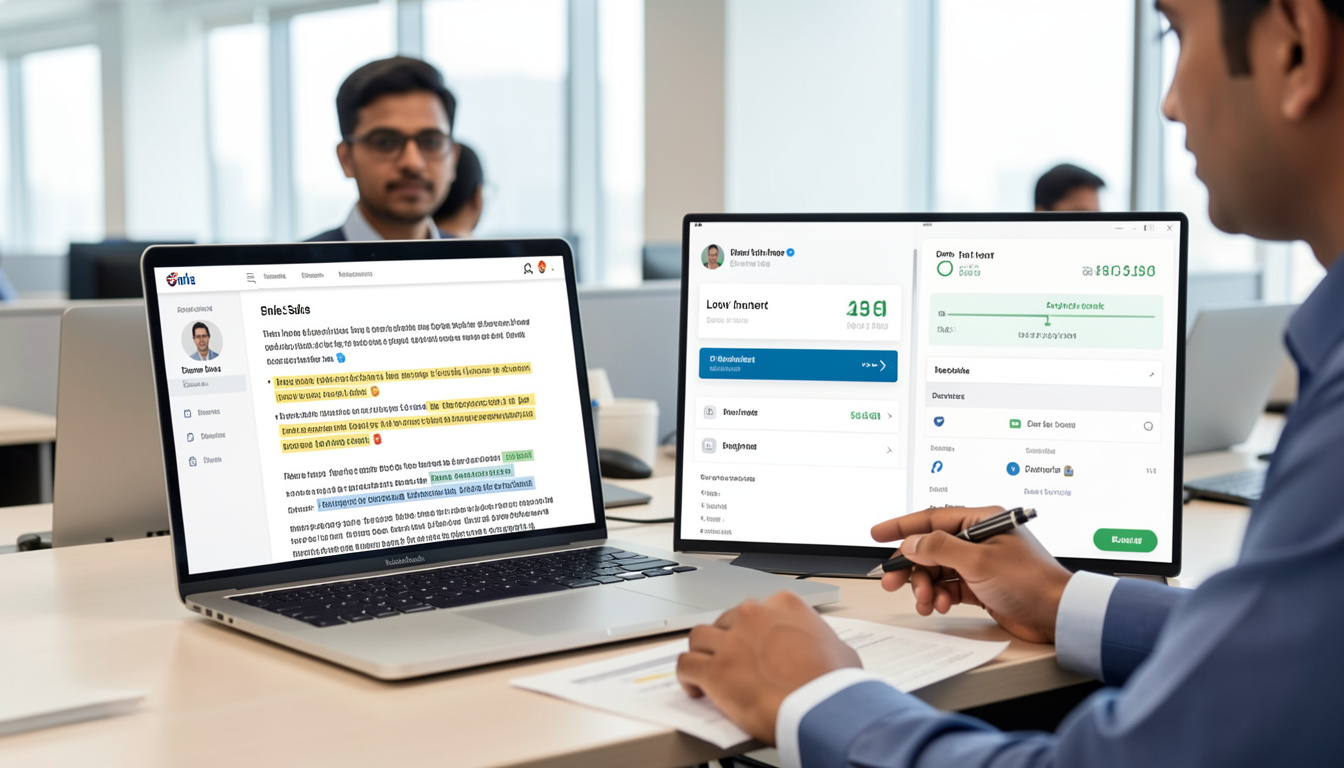
What if the call your telecaller rated two stars was actually a ready
buyer?
Last month, I stopped relying only on telecaller notes and started
reviewing full call conversation transcripts inside our real estate
CRM India setup. What surfaced immediately was uncomfortable. The gap
between what telecallers record and what buyers actually say is
massive. In high-volume environments, that gap quietly leaks revenue.
We flagged a call that was marked low intent. The telecaller had rated
it two stars in the CRM. According to the notes, the buyer was not
serious. But our Semantics AI tool, Ad Unity, which integrates with
our AI CRM for real estate developers, rated the same call dark green,
meaning high intent.
That mismatch forced us to read the transcript.
The buyer was not browsing. They were precise. During the call, they
clearly asked for an east-facing unit. That single requirement already
placed them in the ready buyer category under any real estate lead
management software in India.
The telecaller responded that east-facing units were sold out. The
buyer disengaged immediately. The lead was marked as having low intent
in the system and pushed down the funnel.
From the telecaller’s perspective, the process was followed.
The telecaller was neither careless nor undertrained. They handled
over a hundred calls that day using a standard real estate CRM Chennai
workflow. Under that load, memory breaks. This is not a people
problem. It is a systems problem.
When a sales manager later reviewed the same transcript inside the
AI-enabled CRM real estate India dashboard, they spotted something
critical. An east-facing unit had opened up earlier that day due to a
booking cancellation. The inventory was live. The information had
simply not reached the caller in time.
One missed update turned a high-intent lead into a lost opportunity.
We called the buyer back within two hours. Same buyer. Same
requirement. This time, with accurate inventory data synced through
our real estate CRM solutions in India.
The outcome was predictable.
The buyer booked.
That revenue would have vanished if we had trusted the two-star rating
and moved on, as most real estate sales automation in India would.
Telecaller notes are interpretations. They are shaped by fatigue,
assumptions, and speed. They are not the buyer’s voice.
Conversation transcripts remove that interpretation layer. When viewed
inside AI real estate CRM India or AI real estate CRM Chennai
platforms, patterns become obvious. You see intent signals clearly.
You understand why a buyer paused. You identify inventory mismatches
instantly.
This is why top CRM for real estate India systems now prioritise
transcript analysis over manual ratings.
In high-volume calling environments, relying only on telecaller
summaries inside CRM for builders India or CRM for property developers
India guarantees data loss. Humans are not built to process hundreds
of conversations without distortion.
Reading transcripts inside real estate workflow automation India tools
gives leadership direct access to buyer language. It improves demand
forecasting. It sharpens inventory planning. It reduces false
negatives in lead qualification.
This is exactly where AI real estate CRM tools outperform traditional
setups.
That two-star call was never low intent. It was low visibility.
When you combine real estate sales automation Chennai, AI-enabled CRM
real estate Chennai, and transcript-based review, revenue stops
slipping silently. Buyers stop being misjudged. Decisions get cleaner.
Growth does not always come from more leads. Sometimes it comes from
listening better to the ones already sitting inside your real estate
CRM India system.
If this article sparked some ideas, share it with your network!


